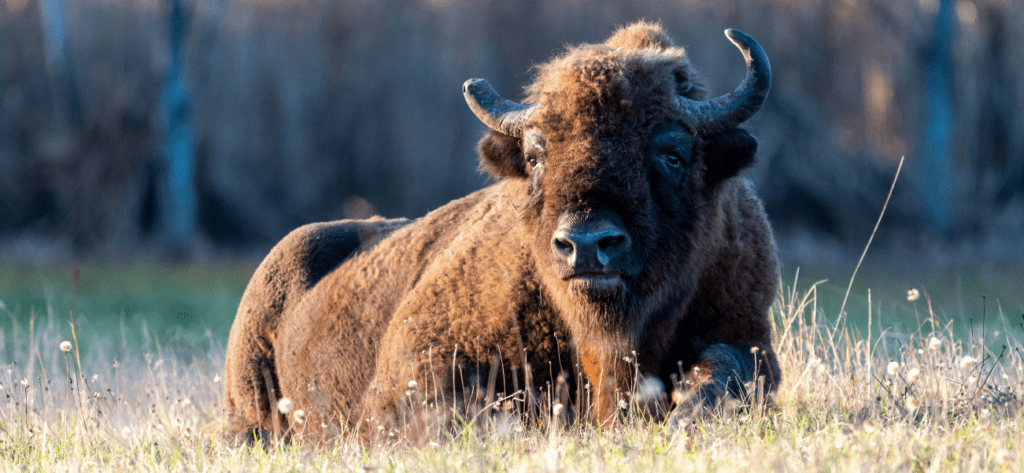
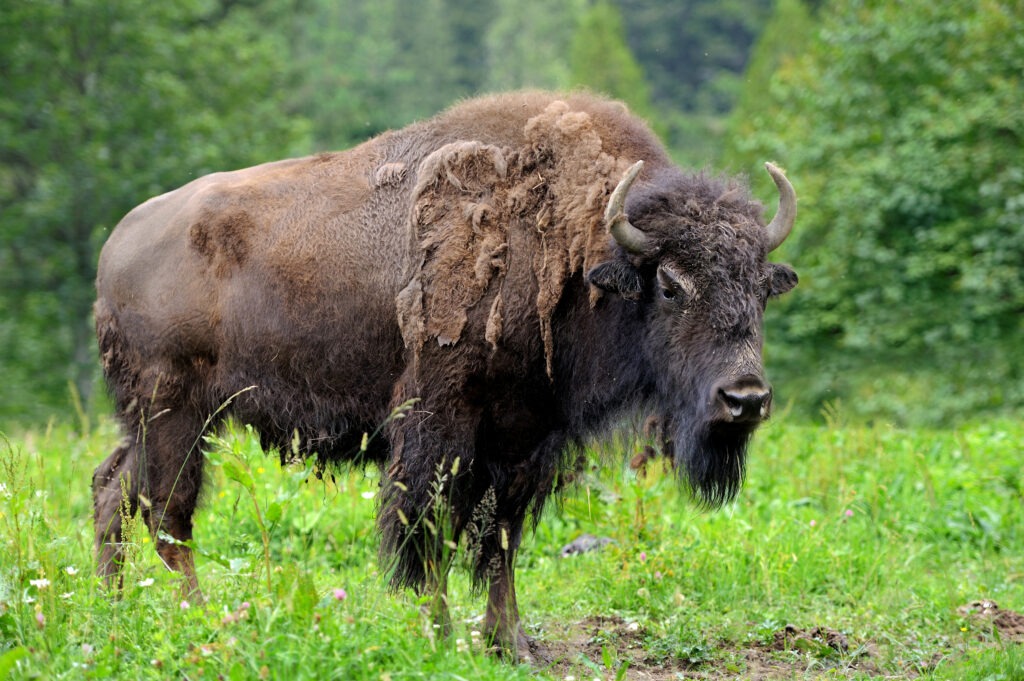
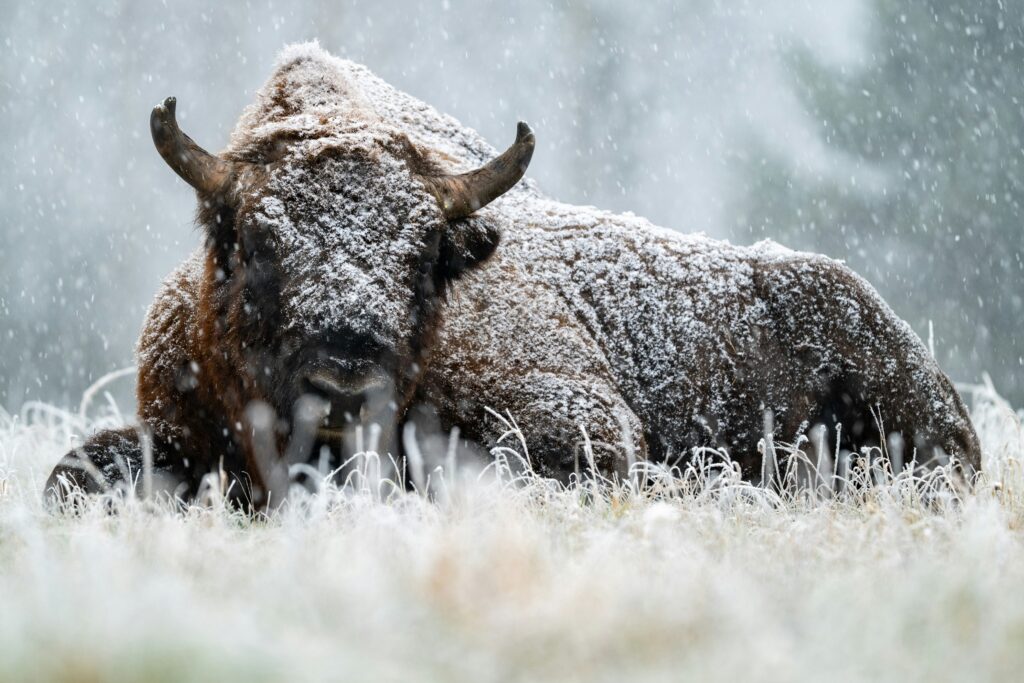
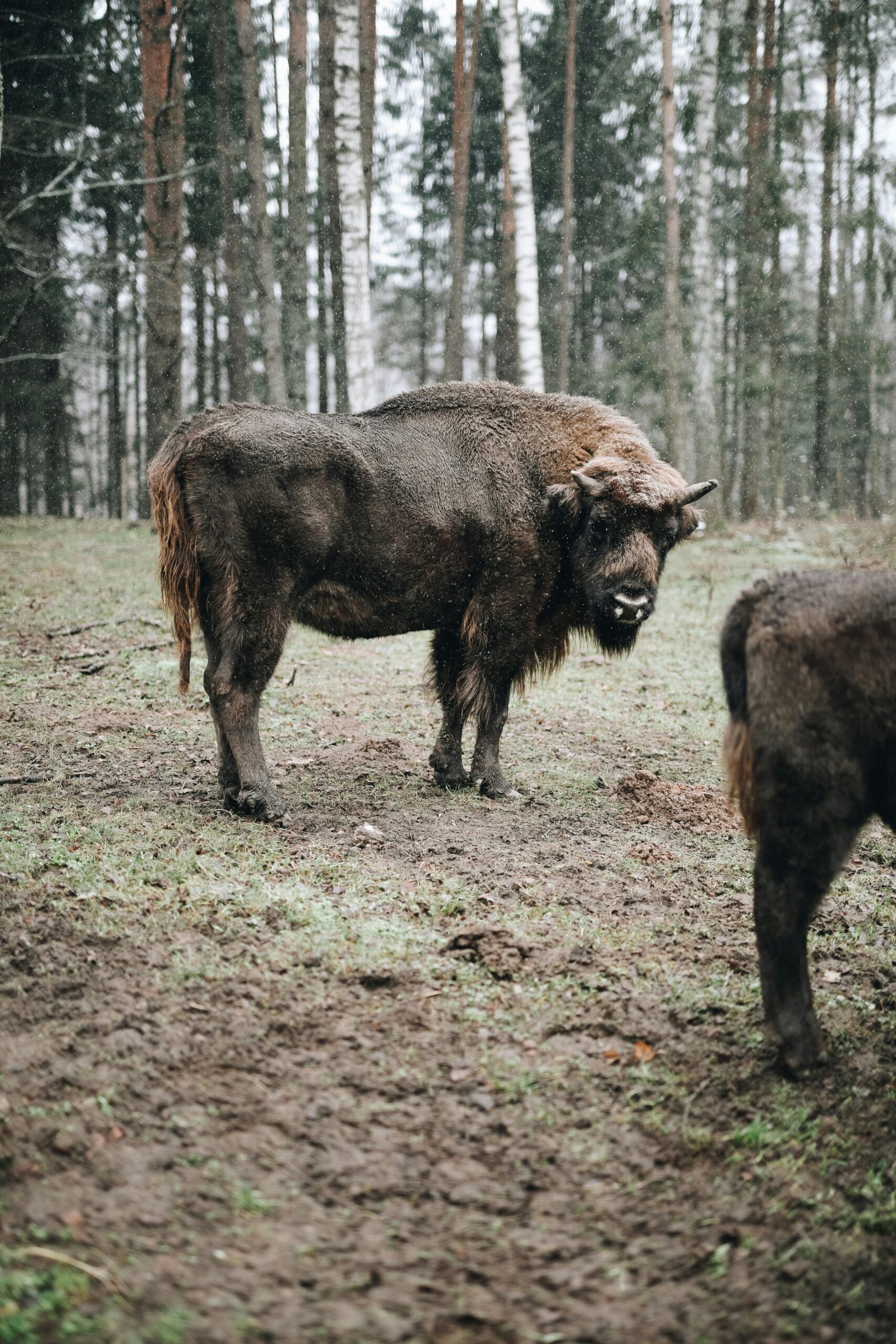
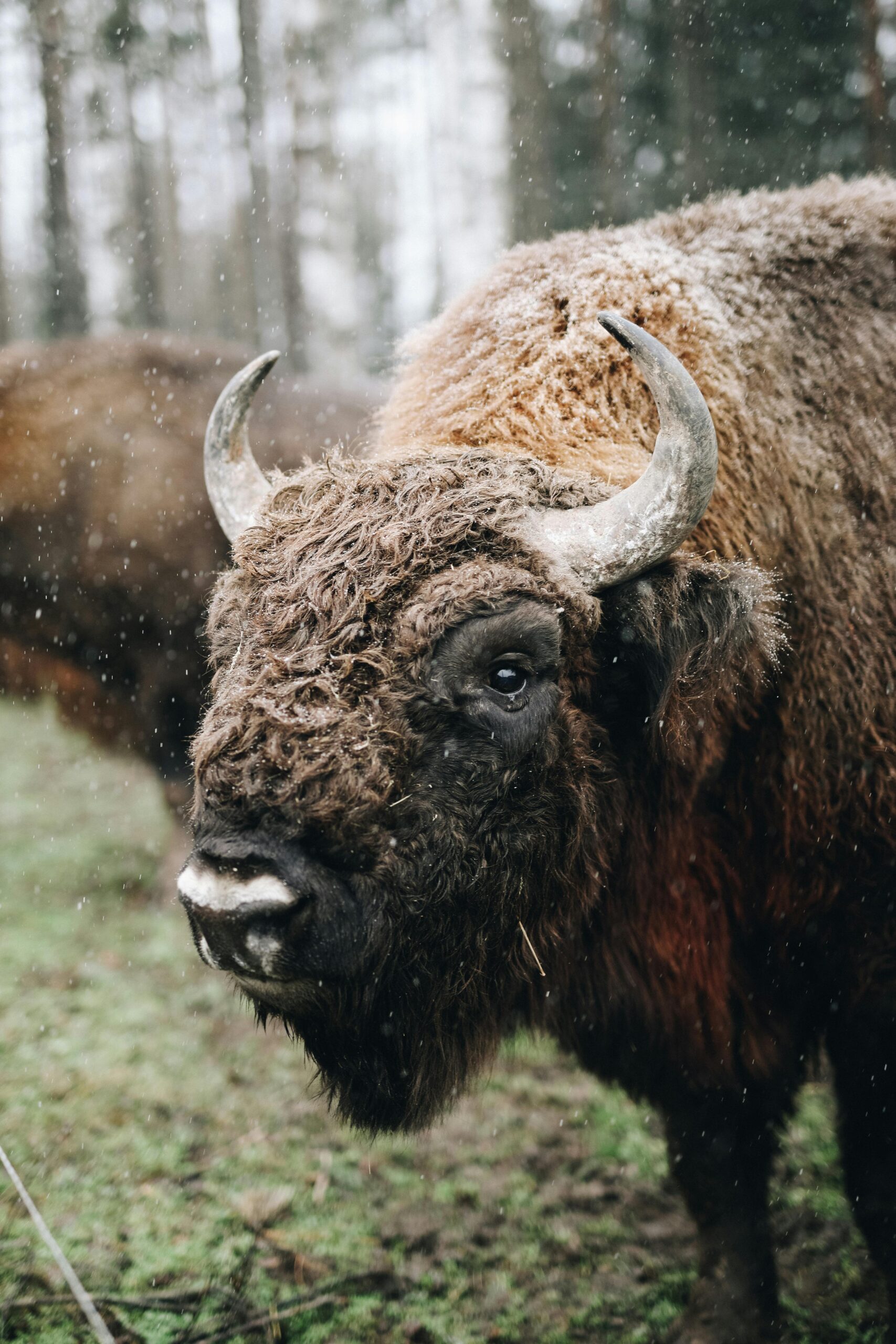
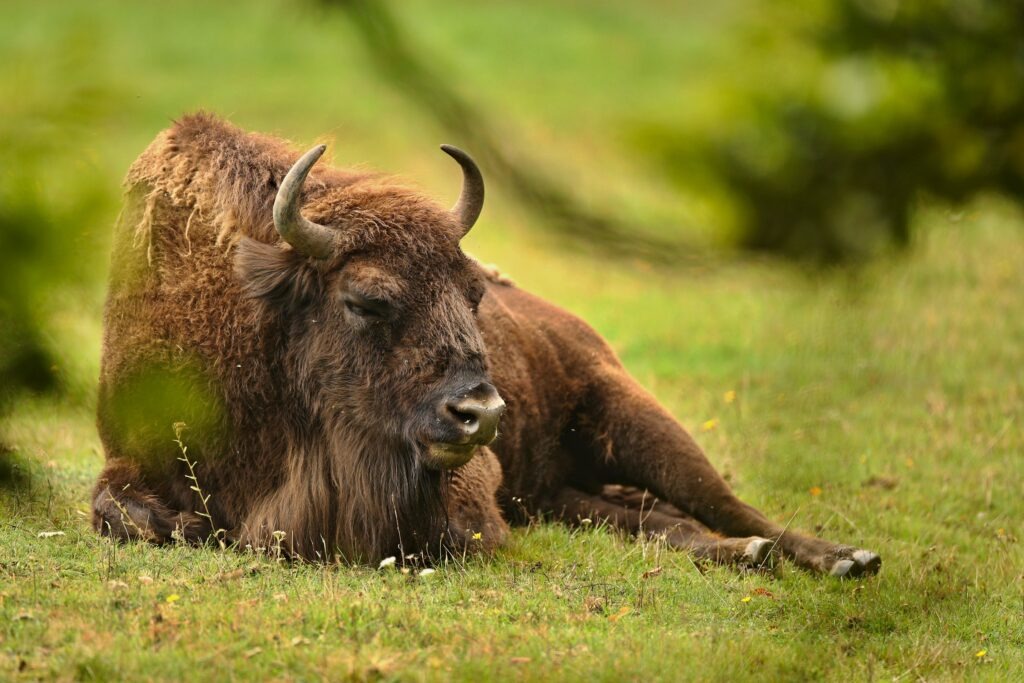
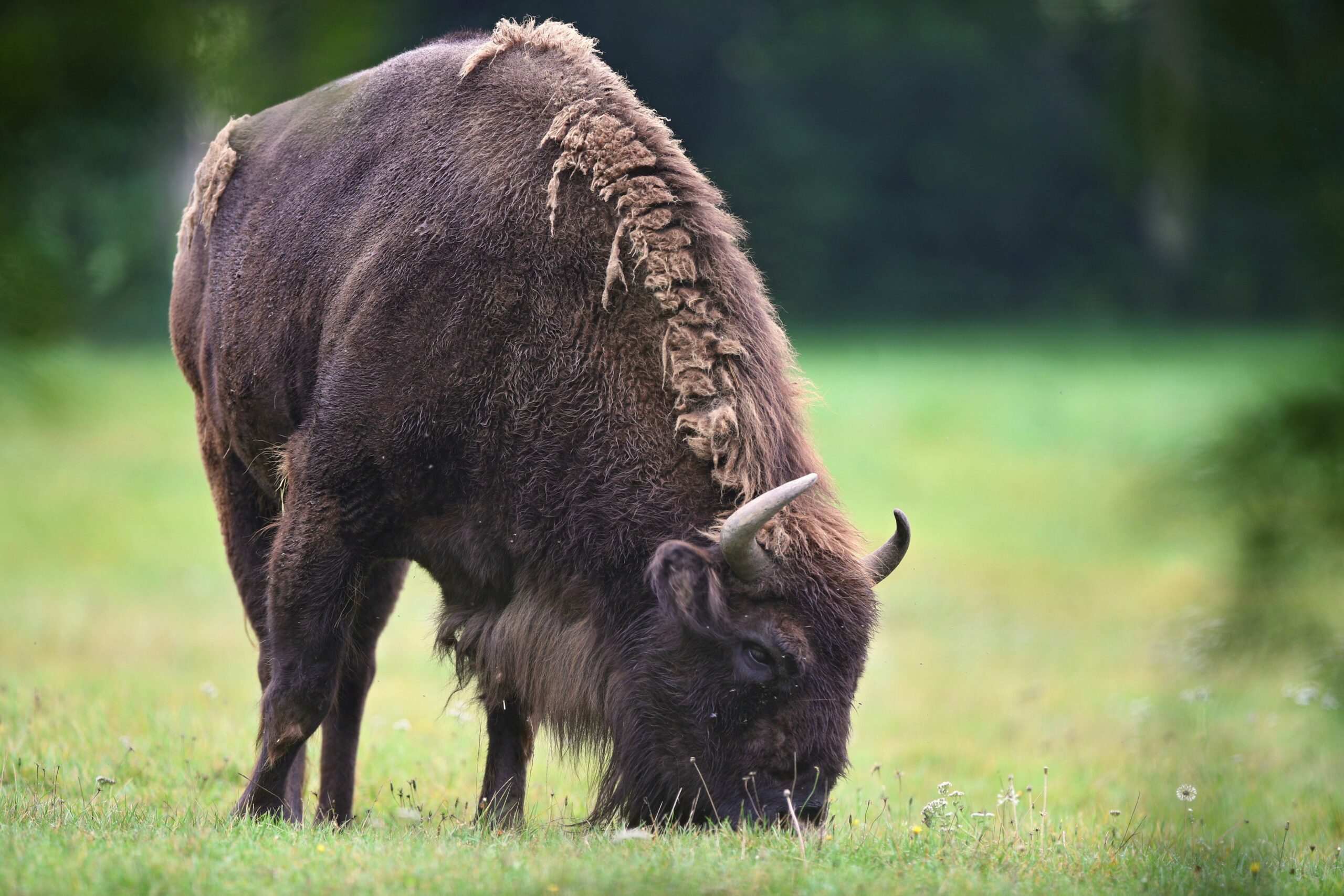
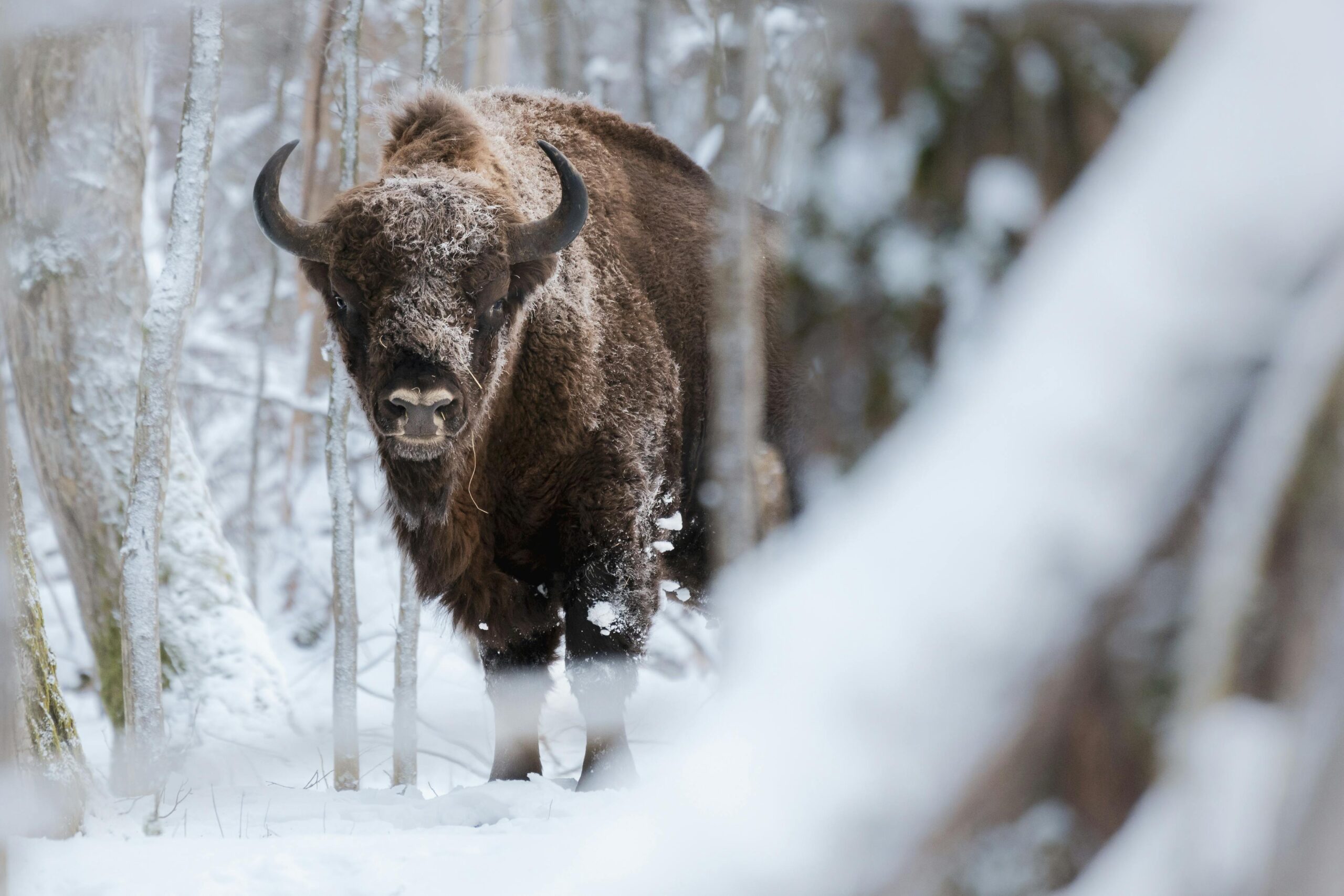
There are animals you simply observe. And there are animals that completely change the way you experience a forest.
The European bison belongs to the second group.
Standing in the misty meadows of the Białowieża Forest at sunrise, watching a massive bull emerge from the trees, it is hard to believe that just over a century ago this species was gone from the wild.
Not “almost extinct.” Extinct.
The last wild lowland European bison in Białowieża was killed by poachers in 1919.
Yet today the species walks the forest again.
And that makes the European bison one of the greatest wildlife comeback stories in Europe.
A survivor from another age
The European bison (Bison bonasus) is the heaviest land mammal in Europe. Large males can weigh close to 1,000 kilograms. Its ancestors roamed Europe alongside mammoths during the Ice Age.
For thousands of years bison moved across vast forests and open landscapes. But as agriculture expanded and forests disappeared, their range slowly collapsed.
Eventually, only a few refuges remained.
The most important one was Białowieża.
The forest that became the last sanctuary
For centuries, the Białowieża Forest served as a royal hunting ground. Ironically, this special status helped protect the species longer than anywhere else in Europe.
But the First World War changed everything.
War, hunger, and uncontrolled poaching devastated the population. The final wild individual disappeared in 1919.
The king of the forest was gone.
Only 54 animals remained
When conservationists counted the surviving animals after the war, they discovered that only 54 pure-blood European bison were left alive worldwide, all of them in zoos or private collections.
Every wild bison alive today descends from this tiny group.
In 1923, international efforts to save the species began. A few years later, bison returned to Białowieża.
One of the first was a bull named Borusse, brought from Germany in 1929.
That was the beginning of the species’ second life.
Returning the king to the wild
At first, the animals lived in breeding enclosures. Later, they were gradually released into the forest.
The process took decades.
Scientists and conservationists had to rebuild the population almost from scratch while dealing with genetic bottlenecks, disease risks, and habitat protection. Many free-ranging herds across Europe today trace their origins back to Białowieża bison.
Today, the Białowieża Forest remains the most important stronghold of the species and hosts the world’s largest free-ranging population of European bison.
More than a symbol
It is easy to see the bison as a symbol of Poland or simply a tourist attraction.
But the animal represents something much bigger.
The European bison is proof that conservation can work.
A species once extinct in the wild now walks freely through Europe’s last primeval forest again.
And that is why seeing one in the wild feels different from any ordinary wildlife encounter.
You are looking at an animal that was never supposed to return.
Auuuu! We use cookies to ensure that we give you the best experience on our website. If you continue to use this site we will assume that you are happy with it.